
Stress is a part of life—but it doesn’t have to take over your life.
Whether it’s work deadlines, family responsibilities, studies, or unexpected challenges, stress can affect anyone. While a little stress can help us stay motivated, too much stress can impact our physical health, emotional well-being, and relationships.
The good news is that managing stress doesn’t always require major life changes. Small, consistent habits can make a significant difference in how you feel every day.
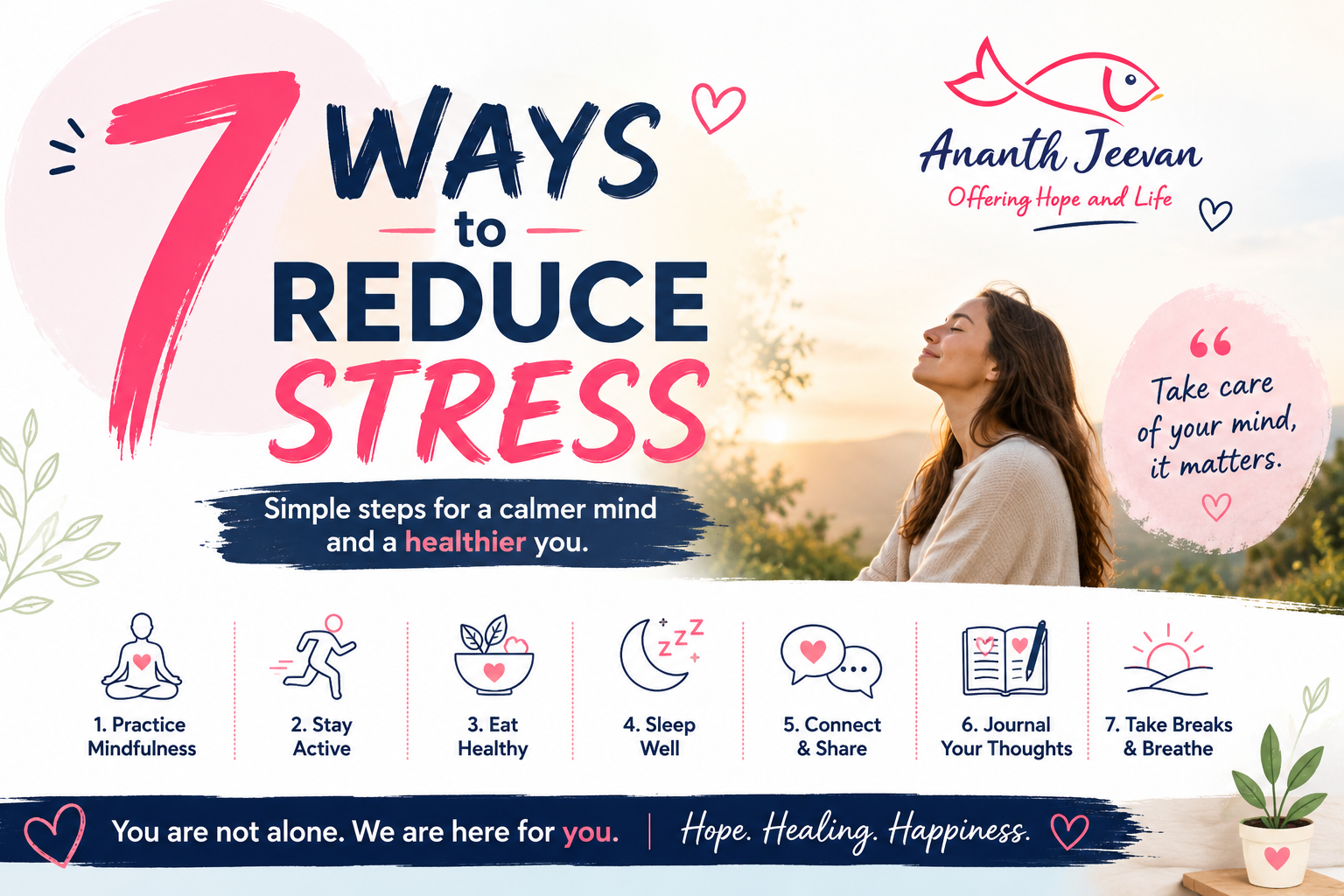
Here are 7 simple and effective ways to reduce stress and improve your overall mental well-being.
1. Practice Deep Breathing
When you’re stressed, your breathing often becomes quick and shallow. Taking slow, deep breaths sends a signal to your brain that it’s safe to relax.
Try this simple exercise:
Inhale through your nose for 4 seconds.
Hold your breath for 4 seconds.
Exhale slowly through your mouth for 6 seconds.
Repeat for 3–5 minutes.
Even a few minutes of mindful breathing can help reduce anxiety and calm your mind.
2. Stay Physically Active
Exercise isn’t just good for your body—it’s one of the best natural stress relievers.
Physical activity releases endorphins, also known as “feel-good hormones,” which help improve your mood and reduce tension.
You don’t have to spend hours at the gym. Simple activities like:
Walking
Stretching
Cycling
Dancing
Yoga
can make a noticeable difference.
3. Get Enough Sleep
Stress and poor sleep often create a cycle where each makes the other worse.
Adults generally need 7–9 hours of quality sleep each night. To improve your sleep:
Go to bed at the same time every night.
Limit screen time before sleeping.
Keep your bedroom cool, dark, and quiet.
Avoid caffeine late in the evening.
A well-rested mind is better equipped to handle daily challenges.
4. Talk to Someone You Trust
You don’t have to carry stress alone.
Sharing your thoughts with a trusted friend, family member, mentor, or mental health professional can provide comfort, fresh perspectives, and emotional support.
Sometimes, simply talking about what’s bothering you can make the burden feel lighter.
Remember, asking for help is a sign of strength—not weakness.
5. Take Breaks and Do Things You Enjoy
Many people feel guilty about taking breaks, but rest is essential for productivity and mental health.
Make time for activities that help you recharge, such as:
Reading
Listening to music
Gardening
Painting
Cooking
Spending time in nature
Learning new instruments
Taking your pet for a walk
Even 15–20 minutes of doing something you enjoy can help lower stress levels.
6. Practice Mindfulness and Gratitude
Mindfulness helps you focus on the present moment instead of worrying about the past or future.
A simple way to begin is by spending a few minutes each day noticing your breathing, your surroundings, or your thoughts without judging them.
You can also keep a gratitude journal by writing down three things you’re thankful for every day. This small habit can shift your focus toward the positive aspects of life and improve emotional resilience.
7. Know When to Seek Professional Help
Occasional stress is normal, but if stress becomes overwhelming, lasts for weeks, or starts affecting your work, relationships, sleep, or daily life, it may be time to seek professional support.
Mental health professionals can help you understand the source of your stress and teach healthy coping strategies tailored to your needs.
There is no shame in reaching out—taking care of your mental health is one of the most important investments you can make in yourself.
Final Thoughts
Stress is a natural part of life, but it doesn’t have to control your life. Small daily habits—like practicing breathing exercises, staying active, getting enough sleep, and connecting with others—can help you build resilience and improve your overall well-being.
Remember, progress doesn’t happen overnight. Be patient with yourself and celebrate small steps toward a healthier, calmer life.
If you or someone you know is struggling with ongoing stress or emotional challenges, don’t hesitate to seek support. You are not alone, and help is always available.
At Ananth Jeevan, we believe that mental well-being begins with awareness, compassion, and timely support. Together, we can build healthier minds and stronger communities.


